Planner Etsy Listings Mockup: A Practical Tool for Sellers Who Want to Save Time and Look Professional
If you have ever created a digital product and then spent hours trying to make it look presentable in an Etsy listing, you already know the struggle. The product itself might be excellent, but if the listing image does not communicate that value clearly, potential buyers scroll right past it. That is where a Planner Etsy Listings Mockup comes into play. It is not just a template. It is a shortcut to a polished, professional storefront without needing design experience or expensive software.
For sellers who offer planners, printables, or digital organizers on Etsy, the challenge is often the same: how do you show a digital product in a way that feels tangible and desirable? A mockup solves that by placing your design into a realistic context. Instead of a flat PNG file, you present it inside a frame, on a desk, or as part of a styled scene. That simple shift can make your listing feel more like a finished product and less like a file waiting to be downloaded.
The Real Value Behind Using a Mockup for Etsy Listings
When you browse Etsy as a buyer, the first thing you notice is the image. Not the title, not the description, not the reviews. The image is what stops the scroll. A well-designed listing image creates an emotional reaction. It suggests quality, care, and professionalism. That is why sellers who use consistent, attractive mockups tend to perform better in search and conversion.
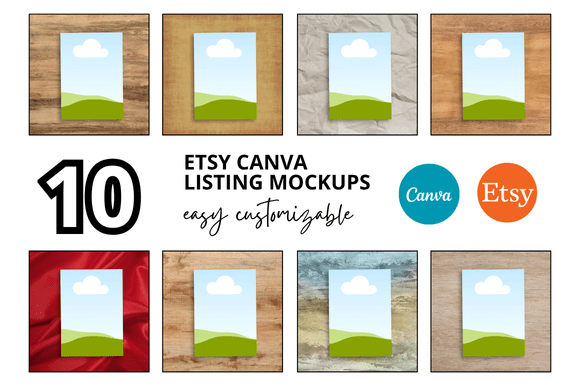
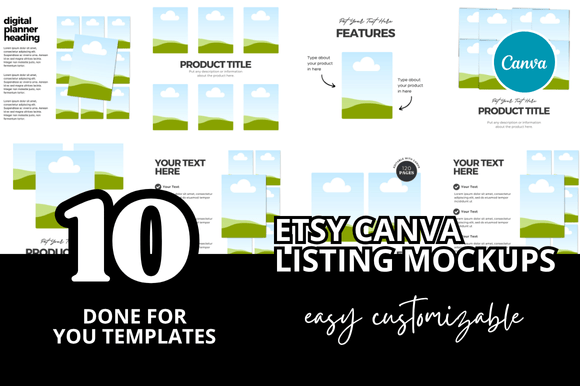
A Planner Etsy Listings Mockup is useful because it takes the guesswork out of that first impression. You do not need to set up a photography studio or hire a stylist. You do not need to print your planner pages, arrange props, and hope the lighting is right. Instead, you open a Canva template, drop your design into the designated area, and export. The scene is already built. The lighting, shadows, and composition are already handled.
This is especially helpful for sellers who launch multiple products in a short time. If you are running a digital shop and adding new planners weekly, you cannot afford to spend an hour on listing images for each one. With a mockup template, that hour becomes five minutes. The consistency across your shop also helps with branding. When a buyer sees your listings, they recognize your style immediately.
Who Benefits Most from Planner Mockups in a Real-World Context
The obvious answer is Etsy sellers, but the reality is broader than that. Consider someone who runs a small Etsy shop selling budget planners. They are likely doing everything themselves: product creation, listing optimization, customer service, and marketing. They do not have a design background, but they understand that visuals matter. For that seller, a mockup template is not a luxury. It is a practical necessity that lets them compete with larger shops without hiring help.
Then there is the seller who focuses on wellness journals or habit trackers. Their audience is looking for something that feels calm and intentional. A mockup that shows the planner on a cozy desk with a cup of tea and a plant in the background communicates that feeling instantly. The buyer imagines themselves using that product in their own space. That is the power of context.
Another scenario involves sellers who create products for different niches. Maybe you have a line of academic planners for college students and a separate line of meal planners for busy parents. These audiences have different visual expectations. A generic mockup will not work for both. Having a set of versatile Planner Etsy Listings Mockup templates allows you to tailor the presentation to each audience without starting from scratch each time.
Even experienced sellers with design skills often use mockups. Why? Because it is efficient. You can create a listing image in minutes, test variations, and iterate quickly. If a listing is underperforming, you can swap the image without rebuilding the entire scene. That flexibility is valuable when you are trying to optimize your shop based on real data.
Different Ways People Use These Templates Beyond the Obvious
Most people think of mockups as listing images only, but that is just one application. The same template can be used for social media promotion. When you announce a new planner on Instagram or Pinterest, a styled mockup performs much better than a flat graphic. It fits the aesthetic of those platforms and encourages saves and shares.
Some sellers use mockups for email marketing. If you have a mailing list and you send a weekly newsletter featuring your latest products, including a mockup image makes the email feel more curated. It does not look like a sales pitch. It looks like an invitation to explore something beautiful.
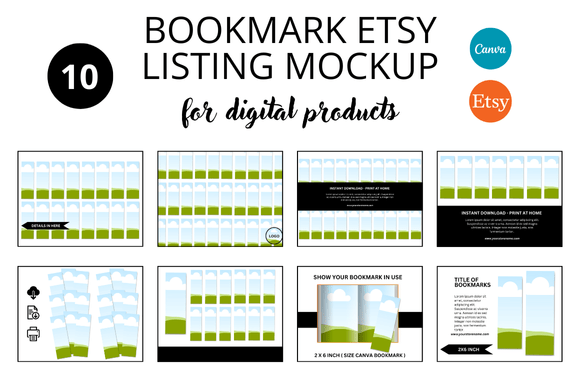
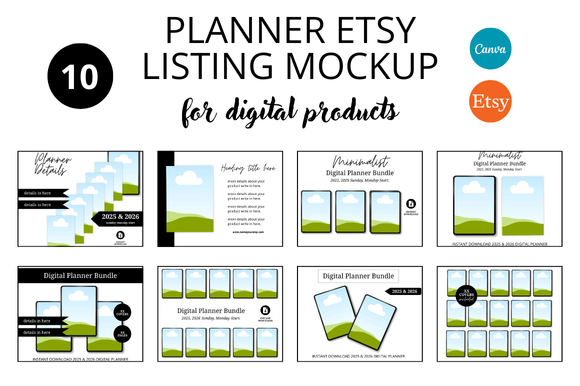
There is also the bundle aspect. Many digital product creators offer bundles of planners, and a mockup helps visualize what is included. Instead of listing each item separately in text, you can show a scene with multiple planners laid out together. That gives the buyer a sense of value and completeness. The bonus freebies that often come with these bundles can also be featured in the same mockup, creating a cohesive promotional image.
Another interesting use case is for Etsy listing videos. Some mockup templates are designed for video, allowing you to create a short clip that shows the planner being flipped through or placed on a desk. Video listings tend to hold attention longer and can improve conversion rates. If you have a video mockup template, you can produce a professional-looking listing video in minutes using Canva.
What to Consider Before Choosing a Mockup Template
Not all mockups are created equal, and picking the right one matters more than you might think. The first thing to look at is the dimensions. A standard Etsy listing image is 2500 by 2000 pixels. If your mockup does not fit that ratio, you will waste time resizing or cropping your work. Templates that come in the correct size save you that hassle from the start.
Another consideration is the level of customization. Some mockups are rigid and only allow you to change the screen or page content. Others give you control over background colors, shadows, and even the frame style. If you want to maintain a consistent brand look across your shop, look for templates that offer some flexibility. The ability to change colors to match your brand palette is a small feature that makes a big difference over time.
Think about the context of the mockup as well. A scene that looks great for a wedding planner might feel out of place for a fitness tracker. Look for templates that have a neutral or adaptable aesthetic. Clean, minimal scenes tend to work across multiple niches. If you specialize in one category, you can choose something more specific, but if you sell a variety of products, versatility is your friend.
The format matters too. Canva-based templates are popular because they are accessible. You do not need to learn Photoshop or any other complex software. If you can drag and drop, you can use a Canva mockup. That lowers the barrier for sellers who are not technically inclined. Just make sure the template is compatible with your version of Canva and that all elements are editable.
Strengths and Realistic Limitations of Using Mockups
One of the biggest strengths of this approach is the time savings. A seller can create a polished listing image in under ten minutes, even if they have no design experience. That frees up energy for other parts of the business, like product development, customer engagement, or marketing strategy. For side hustlers and part-time sellers, that efficiency is invaluable.
Another strength is consistency. When all your listings use similar mockups, your shop looks cohesive. Buyers perceive that as professionalism. It builds trust. They are more likely to purchase from a shop that looks put together than one where each listing has a different style, background, or image quality.
However, there are limitations worth noting. If too many sellers use the same or similar mockup templates, your images can start to look generic. That is a real concern on Etsy, where buyers see hundreds of listings. To stand out, you may need to customize the template further or combine it with unique branding elements. The mockup is a starting point, not a final solution.
Also, mockups can feel staged. Some buyers prefer to see the actual product as it would appear on their own device or in their own space. If your mockup looks too artificial, it might not resonate. That is where authenticity comes in. Use mockups that feel realistic rather than overly stylized. Natural lighting, believable shadows, and simple compositions tend to perform better than elaborate, unrealistic scenes.
Another limitation is that mockups do not replace the need for clear product descriptions and accurate previews. If your mockup shows a beautiful scene but the actual product is different in size, layout, or design, buyers will feel misled. Always ensure that what you show in the mockup matches what the buyer receives. That is especially important for digital products, where the buyer cannot physically examine the item before purchase.
Practical Observations from Sellers Who Use Mockups Regularly
Sellers who have been using mockups for a while often mention that the biggest shift is in their confidence. When you know your listing looks good, you feel better about promoting it. You post it on social media with less hesitation. You run ads with more certainty. That psychological benefit is harder to measure but very real.
Another observation is that mockups can help with pricing. A product that looks premium can often command a higher price point. Two identical planners might sell at different prices simply because one listing communicates higher perceived value through its images. That is not manipulation. It is visual communication. Buyers make judgments in seconds, and you want those judgments to work in your favor.
Some sellers also use mockups to test new product ideas before fully committing. They create a listing image for a concept planner and see how much interest it generates. If the mockup receives saves or inquiries, they know there is demand. That is a low-risk way to validate product ideas without investing significant time upfront.
For sellers who offer customizable or editable planners, mockups are especially helpful. You can show the blank version, then show a filled-in version using the same mockup, giving buyers a clear idea of both the structure and the potential use.
Making the Most of a Canva-Based Mockup Workflow
If you decide to use a Planner Etsy Listings Mockup that is designed for Canva, the workflow is straightforward. You purchase the template, open the link, and you are taken to a Canva file. You then replace the placeholder design with your own. The template handles the rest. The frame, background, shadows, and any decorative elements stay intact.
One practical tip is to create a folder in Canva where you store all your mockup templates. That way, when you launch a new product, you can quickly browse your options and pick the one that fits best. Over time, you will develop preferences for certain scenes, and you can build a consistent look across your entire shop.
Another tip is to use the same mockup for multiple variations of a product. If you sell a planner in different color schemes, you can create listing images for each variation using the same scene. That maintains consistency while showing the range of options available to buyers.
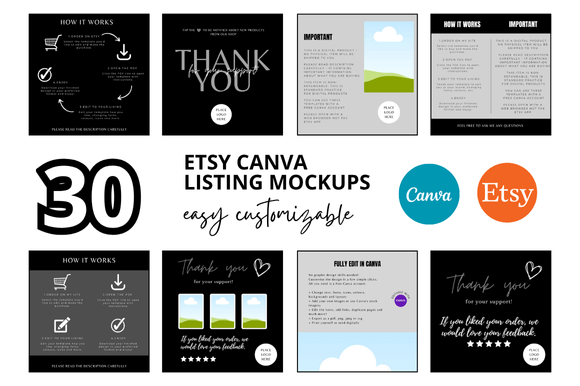
Do not overlook the bonus freebies that often come with these template bundles. Seller guides, color palettes, font pairings, and even additional mockup scenes can add value to your purchase. They are not just extras. They are tools that can improve your workflow further.
Final Thoughts on Bringing Your Listings to Life
The best mockup is the one that makes your product look like something someone would want to use. It is not about showing off a beautiful scene. It is about helping the buyer see themselves using your planner. When you get that right, the listing does the selling for you.
Whether you are a new seller just starting your Etsy journey or an experienced creator looking to streamline your process, a good mockup template removes one of the biggest barriers to professional-looking listings. It saves time, builds consistency, and gives you the freedom to focus on other parts of your business. And in a marketplace where first impressions happen in a split second, that is worth more than most tools in your arsenal.